[ NHI IAM ]

Non-human identity (NHI) management for AI agents and machine identities

Argus governs the complete lifecycle of non-human identities — registration, AI-generated roles and entitlements, approval, provisioning, gateway enforcement, monitoring, and revocation — across databases, SaaS platforms, APIs, repositories, and MCP servers.

CATEGORY
NHIO AM
DEPLOYMENT
SaaS / Self-hosted
TELEMETRY
Real-time
INTEGRATIONS
96+

[ Overview ]

AI agents are no longer simple assistants; they execute real actions against real systems. Argus treats every agent, service account, bot, and workload as a first-class identity with governed access, controlled capabilities, and a fully auditable lifecycle — instead of a static credential pasted into a config file.

[ Capability · 01 ]

NHI Registration

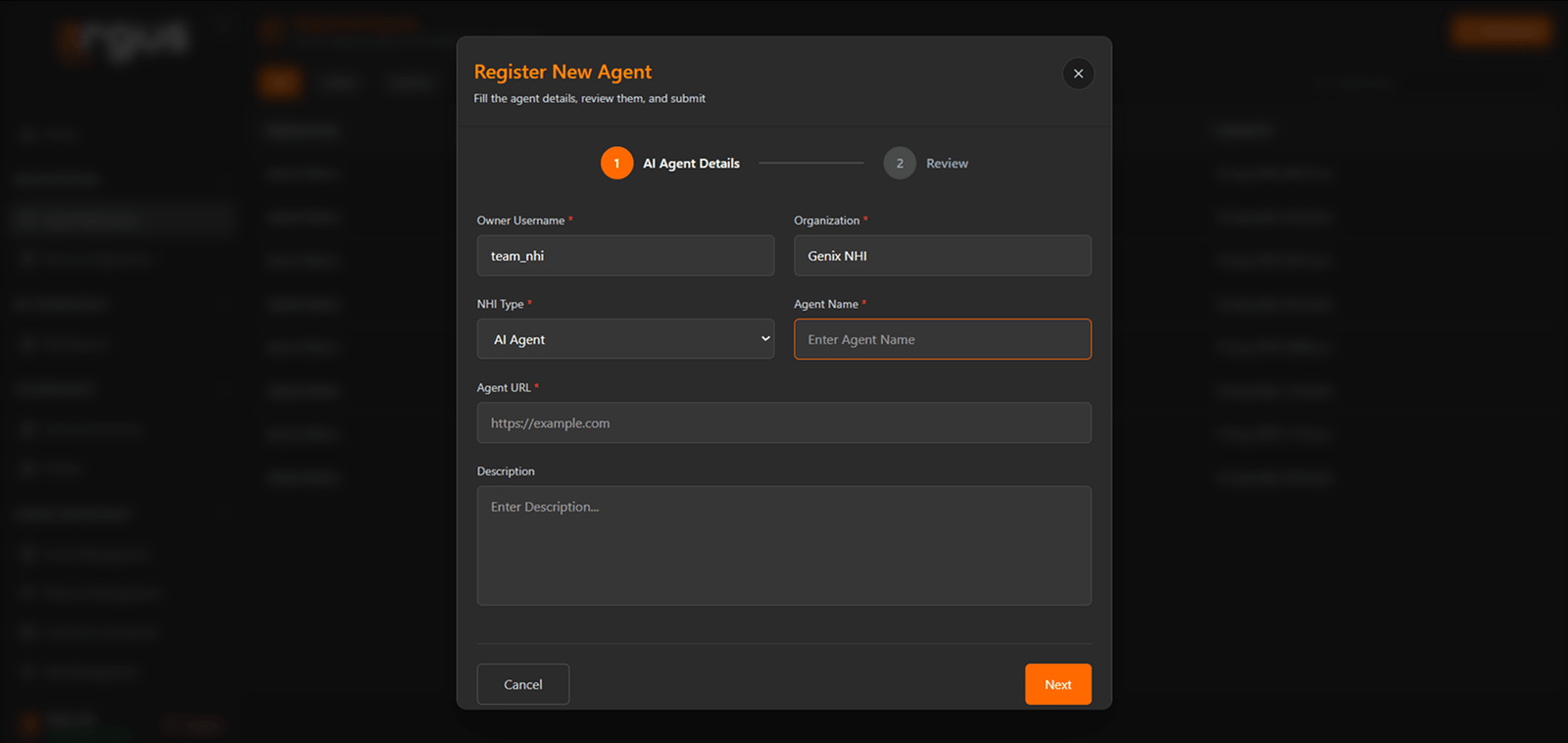
Register AI agents and machine identities as managed NHIs with a unique name, description, NHI type (AI agent, service account, bot, application, workload), human owner, organization, status, and metadata. Argus validates uniqueness, owner, and organization, issues an NHI ID, and maps the identity to resource-specific accounts — establishing a central identity-to-resource relationship.
argus · console
Live
nhi registration 1 - Non-Human Identity (NHI) Management

[ Capability · 02 ]

Resource Registration and Management

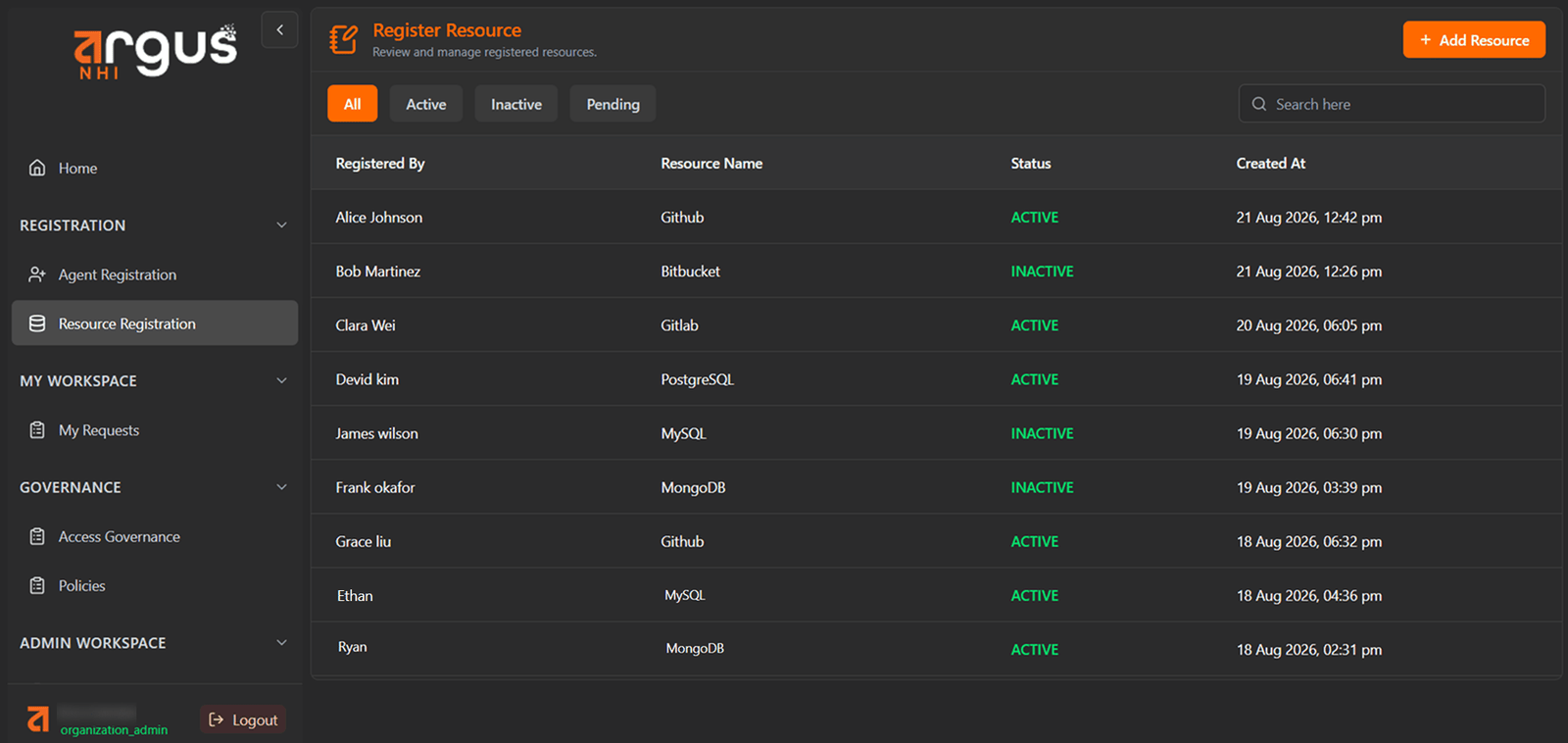
Register PostgreSQL, MySQL, SQL Server, Oracle, GitHub, Jira, SharePoint, REST APIs, and MCP servers with provider, connection configuration, authentication method, sensitivity level, and metadata. Argus tests connectivity, verifies existence, runs health checks, discovers metadata, and moves each resource through review, approval, activation, deactivation, and archival.
argus · console
Live
resource registration and managment - Non-Human Identity (NHI) Management

[ Capability · 03 ]

AI-Generated Roles and Entitlements

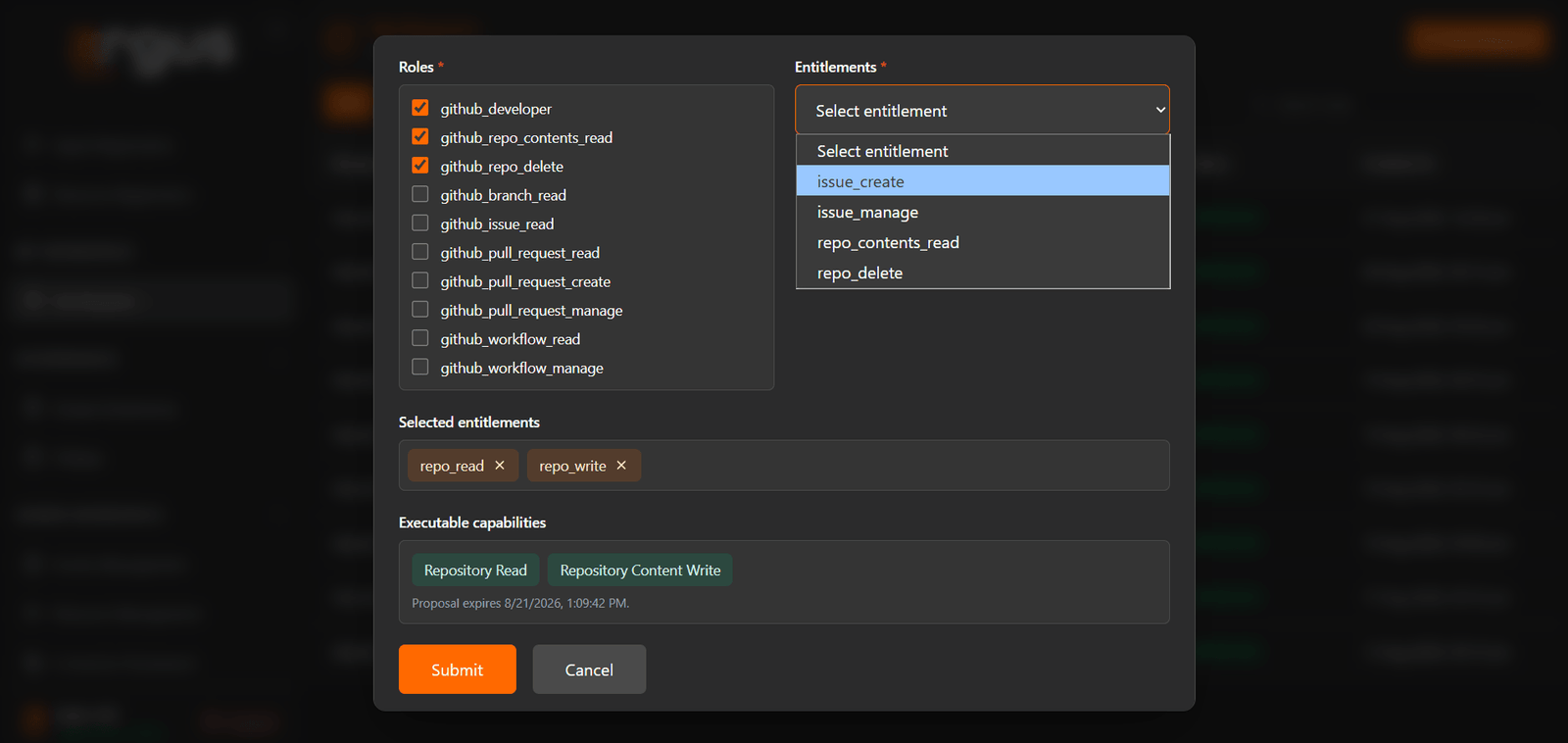
When a resource is registered, Argus generates the access model for you: resource-specific roles (for example PostgreSql_Admin, PostgreSql_Developer, PostgreSql_Analyst, PostgreSql_Viewer), granular entitlements (Read, Write, Delete, Execute), and the role-to-entitlement mappings that connect them. The generated model is never blindly accepted — teams can add, edit, rename, or delete roles and entitlements and adjust descriptions and scopes before approval.
argus · console
Live
ai generated roles and entitlements - Non-Human Identity (NHI) Management

[ Capability · 04 ]

Access Requests with Automatic Entitlement Resolution

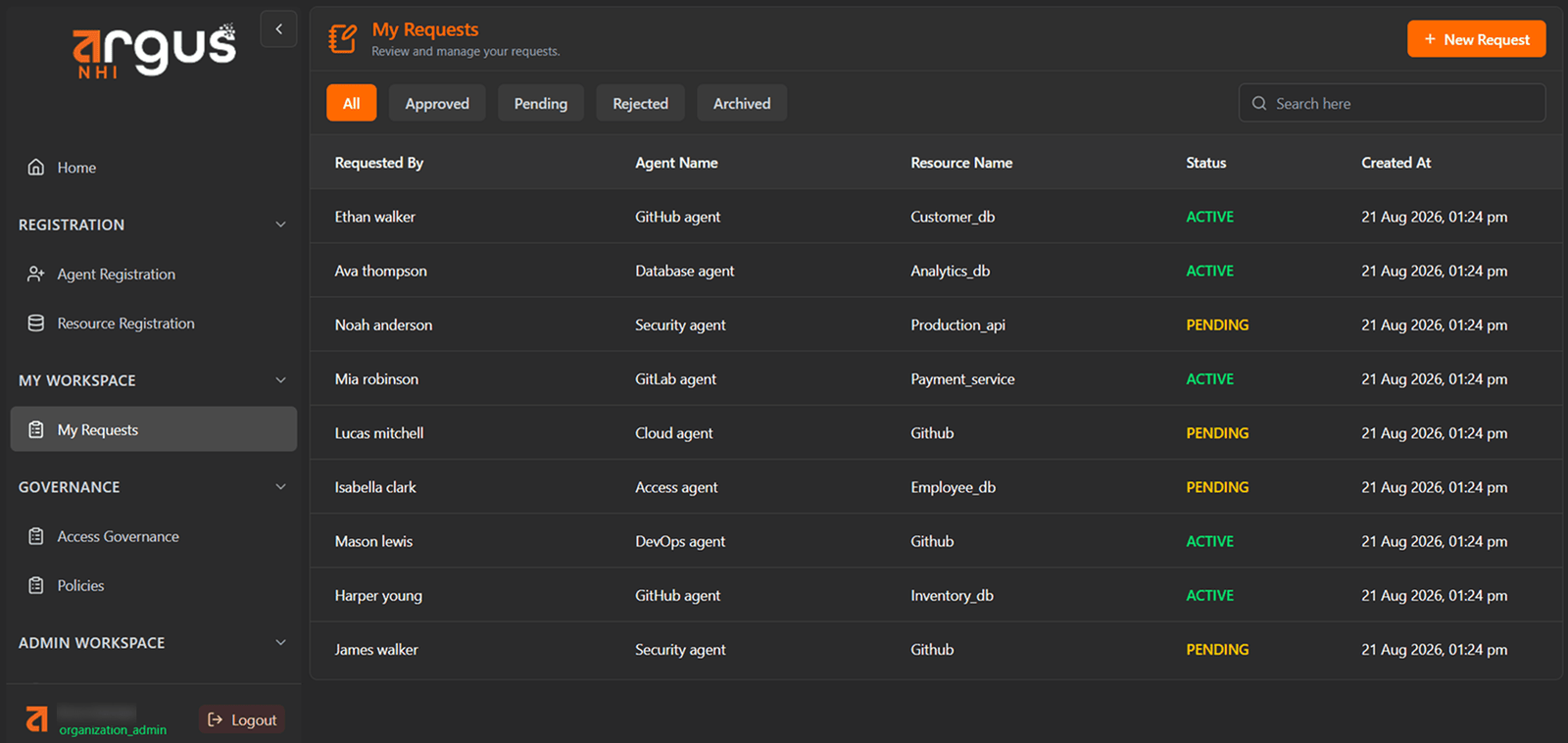
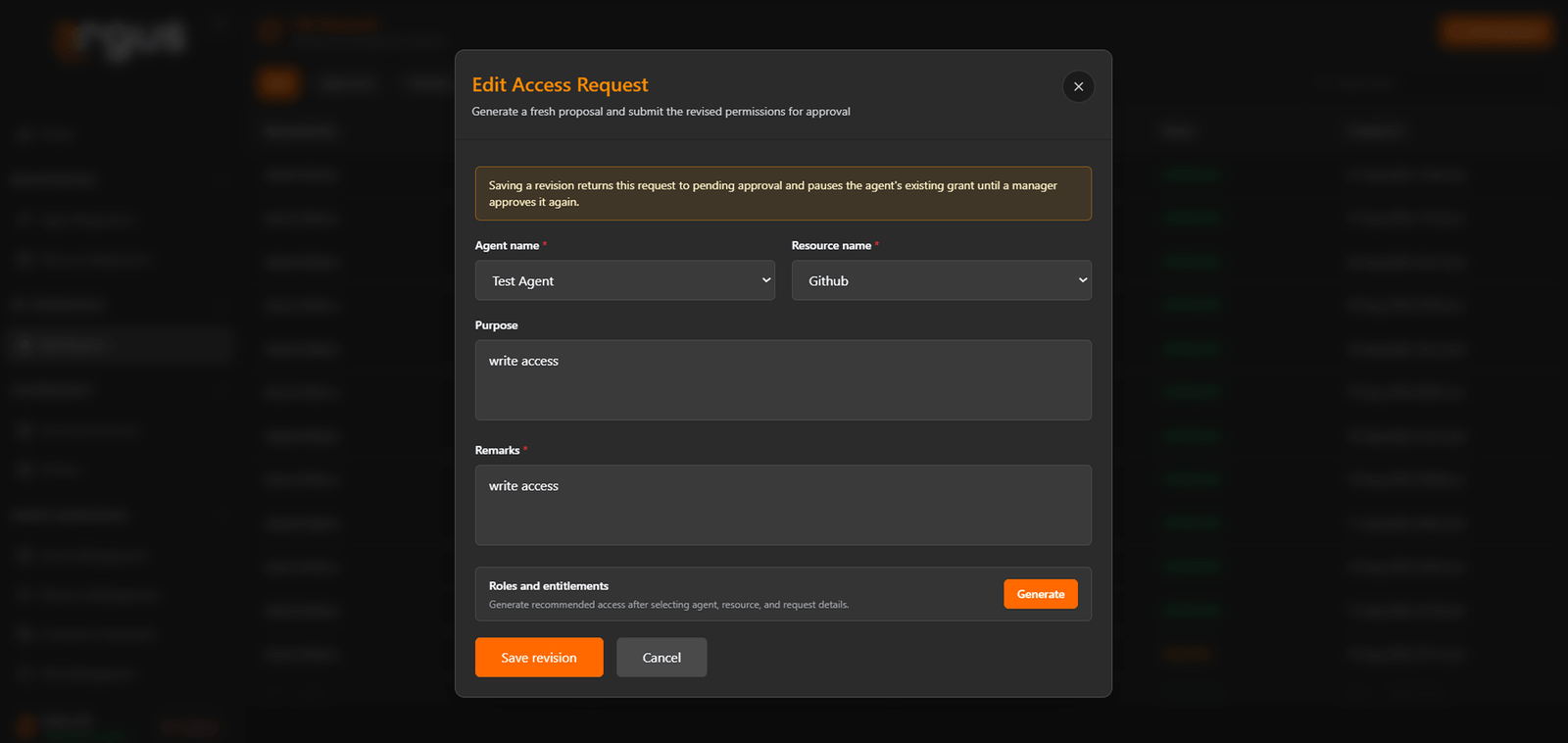
An owner selects the NHI, the target resource, and the roles required, with a purpose and justification. Argus automatically resolves the underlying entitlements from the role mapping, so nobody hand-picks low-level privileges. Every request is validated for resource status, valid roles and entitlements, and duplicate or conflicting access before it enters the approval workflow.
argus · console
Live
access requests with automatic entitlement resolution - Non-Human Identity (NHI) Management

[ Capability · 05 ]

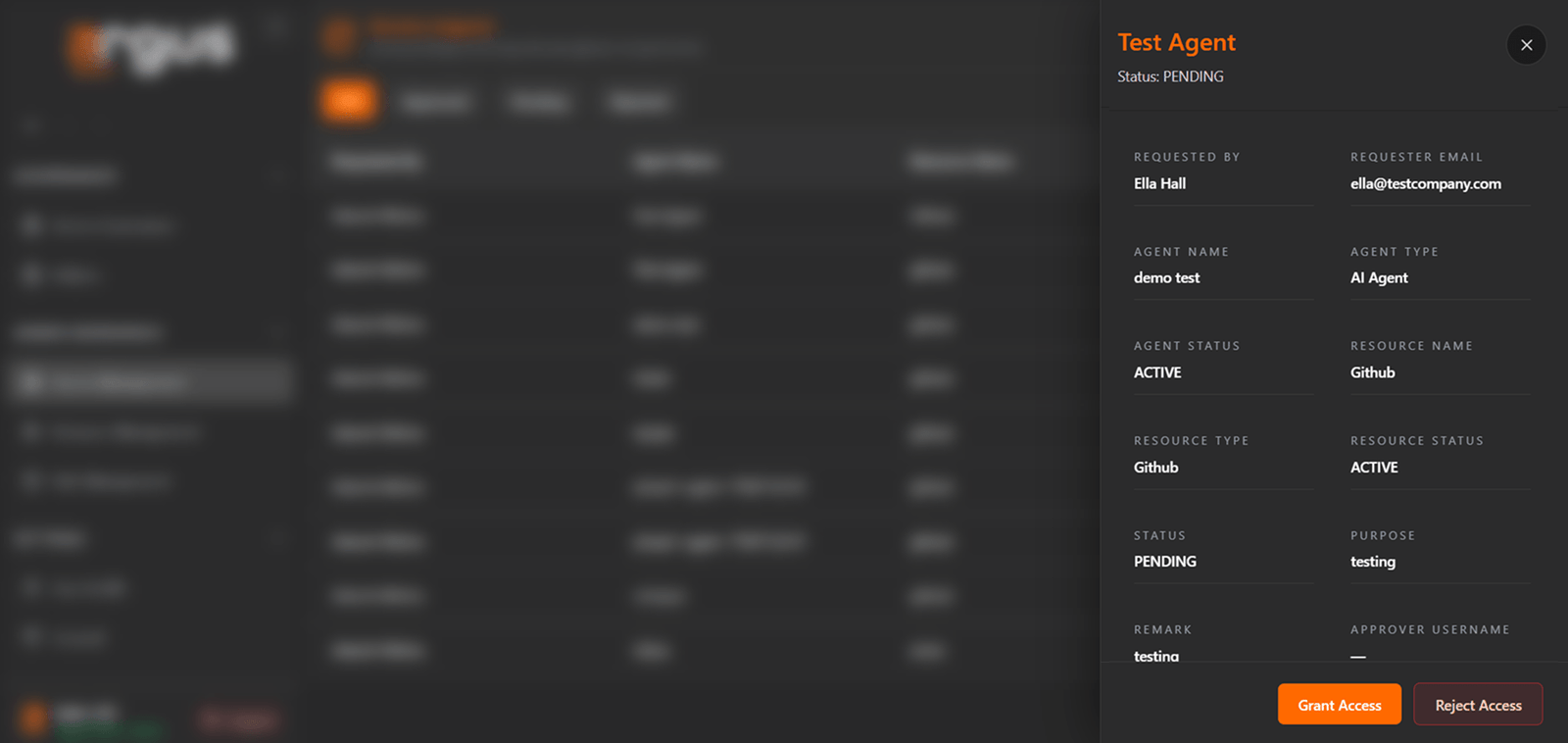
Approval Workflow and Provisioning Engine

Approvers see the NHI, resource, roles, entitlements, privilege level, risk classification, and justification in one view. Once approved, the Provisioning Engine resolves the connector, creates the resource account, assigns approved roles, applies the resolved entitlements, and records provisioning status and history — including retries and failures.
argus · console
Live
approval workflow and provisioning engine - Non-Human Identity (NHI) Management

[ Capability · 06 ]

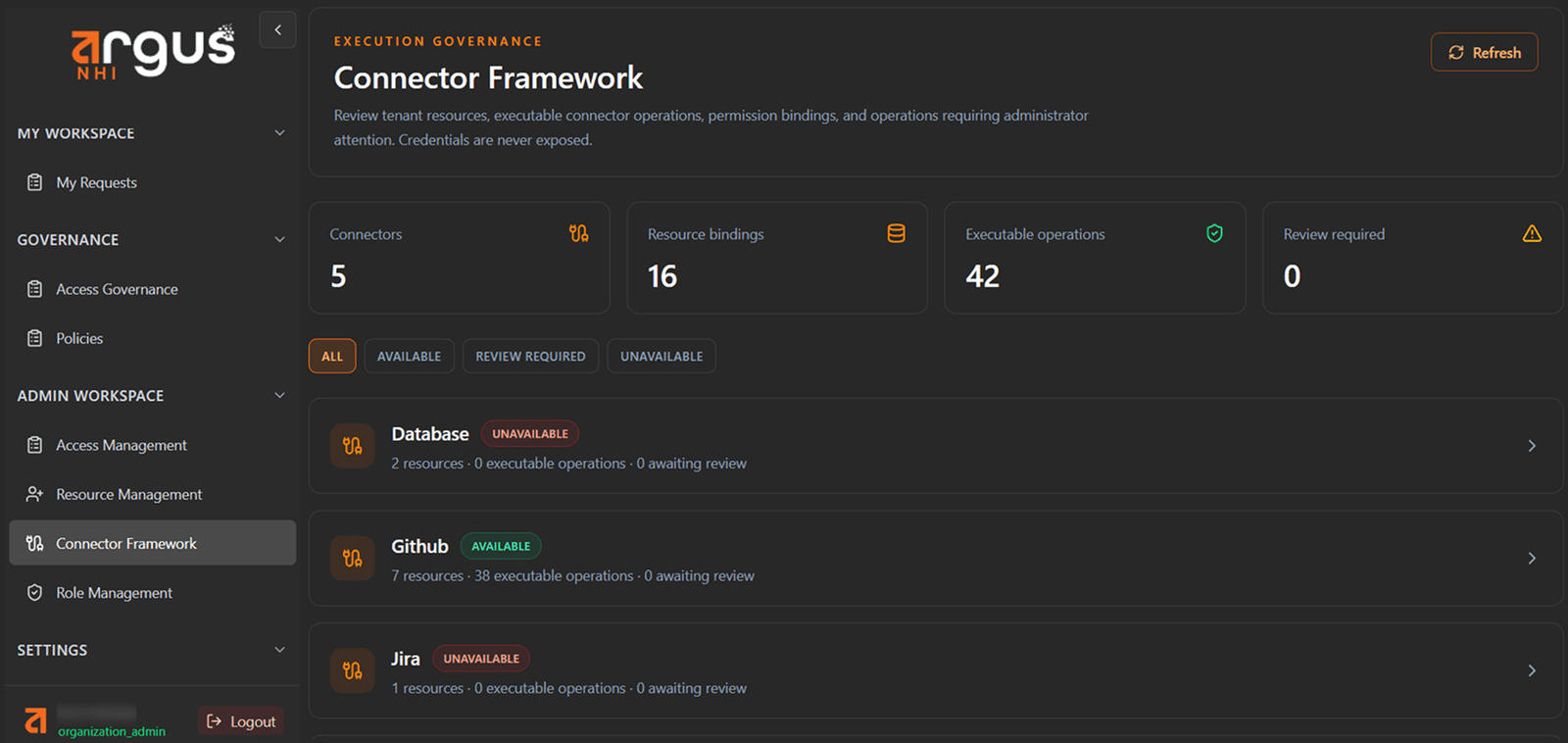
Connector Framework

A pluggable connector layer abstracts the differences between resources, providing consistent operations for connection testing, account creation and update, role assignment and removal, entitlement assignment and removal, revocation, health checks, and metadata discovery — so adding a new resource type does not change the governance model.
argus · console
Live
connector framework 1 - Non-Human Identity (NHI) Management

[ Capability · 07 ]

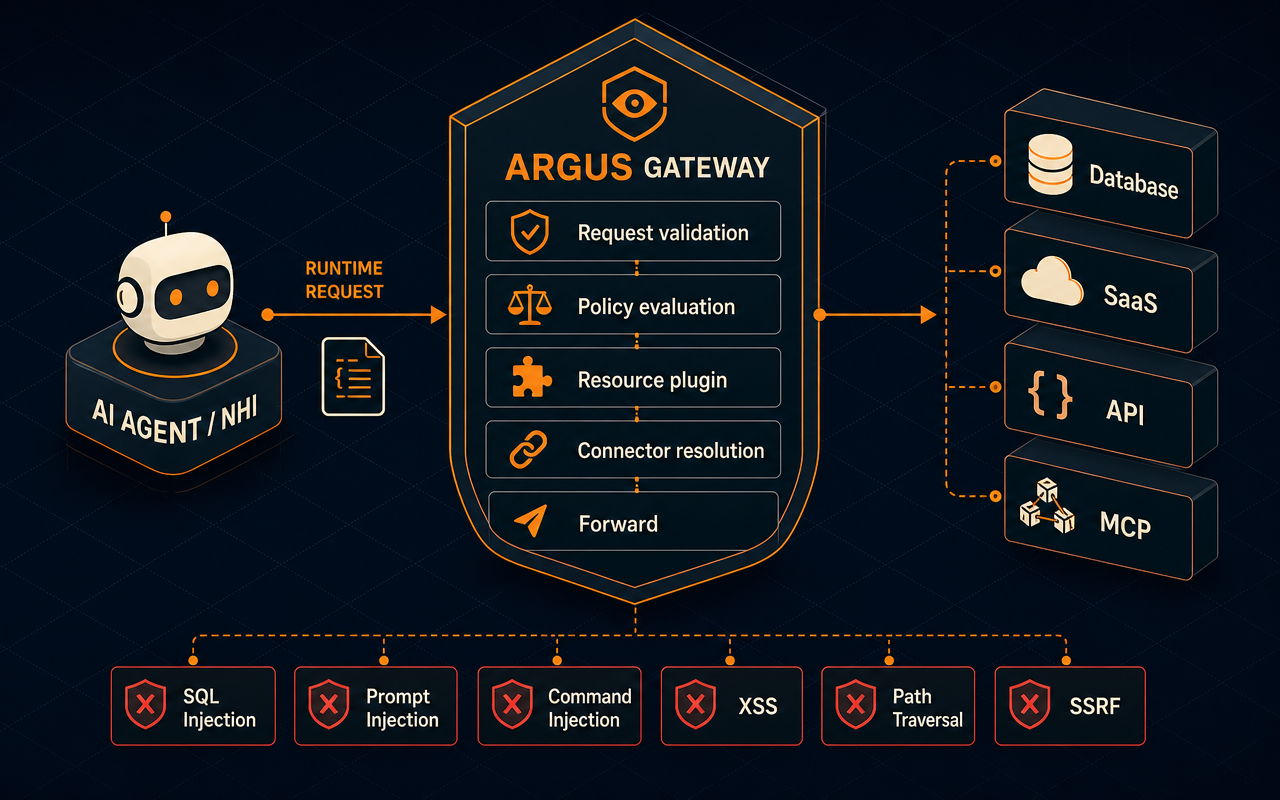
Gateway Enforcement and Resource Plugins

Every runtime request from an NHI passes through the Argus Gateway: request validation, policy evaluation, resource-specific plugin processing, connector resolution, and forwarding to the target. Security validation covers SQL injection, prompt injection, command injection, XSS, path traversal, and SSRF, alongside business validation of supported operations — before the request ever reaches the resource.
argus · console
Live
gateway enforcement - Non-Human Identity (NHI) Management

[ Capability · 08 ]

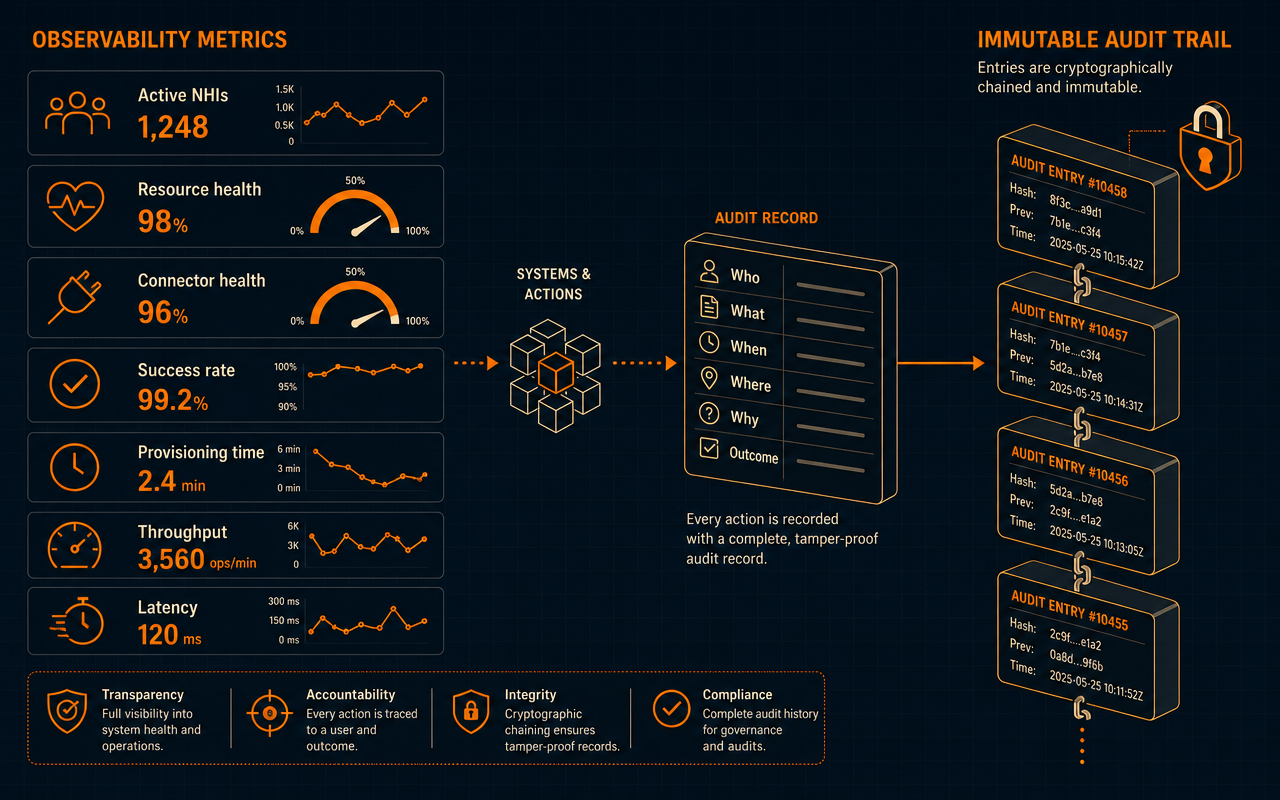
Monitoring, Audit, and Reporting

Track NHI, resource, connector, provisioning, and gateway metrics — active and inactive identities, resource and connector health, success and failure rates, provisioning time, retries, throughput, and latency. Audit records capture who initiated an operation, which NHI was involved, the target resource, the policy decision, and the result, so you can trace who, what, when, where, why, and outcome for every significant event.
argus · console
Live
monitoring audit - Non-Human Identity (NHI) Management

[ Capability · 09 ]

Access Modification and Revocation

Access changes as work changes. Argus supports partial revocation (remove specific entitlements or roles) and full revocation (remove entitlements and roles, then disable or delete the resource account), with complete revocation history retained for audit and compliance.
argus · console
Live
access modification and revocation - Non-Human Identity (NHI) Management
[ Why Argus ]

Why Argus for Non-Human Identity Management

AI agents should not simply have credentials. They should have identities, governed access, controlled capabilities, and an auditable lifecycle. Argus brings all of that together in one platform.

[ 01 ]

NHI-first identity management — every AI agent and machine identity has a managed lifecycle

[ 02 ]

Least privilege by default, with entitlements resolved from approved roles instead of hand-assigned

[ 03 ]

AI-generated access models that your team reviews, edits, and approves before anything is provisioned

[ 04 ]

Runtime enforcement at the Gateway, including prompt-injection and SQL-injection validation

[ 05 ]

One connector framework across databases, SaaS, APIs, repositories, and MCP servers

[ 06 ]

Complete audit trail for provisioning, policy decisions, modifications, and revocation
[ See Argus in action ]

Give your AI agents identities, not credentials

See how Argus registers, governs, provisions, enforces, and revokes access for non-human identities across your enterprise resources.
[ Definition ]

What is a non-human identity?

A non-human identity (NHI) is any identity used by software rather than a person: AI agents, service accounts, bots, API keys and workloads. NHI management gives each of them a governed identity with least-privilege access. Argus NHIAM registers every agent and service account, generates roles with AI, routes access through approvals and enforces it at a gateway, with full audit and revocation.

[ FAQ ]

Non-Human Identity (NHI) Management FAQ

How do you secure AI agents?

Give each agent its own identity instead of shared credentials, grant only the access it needs, require approval for new access, enforce it at a gateway and audit every action. Argus NHIAM covers each of these steps.

What is NHIAM?

NHIAM (non-human identity and access management) is the Argus governance capability for AI agents and machine identities: registration, AI-generated roles and entitlements, access requests, approval workflows, provisioning, gateway enforcement, monitoring and revocation.

Does Argus NHIAM work with Saviynt and StrongDM?

Argus works with partners including Saviynt for identity governance and StrongDM for privileged access. See the partner pages for how each integration works.

Ready when you are

See Argus in your environment

Talk to an engineer for a 30-minute working session and see how Argus converges detection, response, and exposure management into a single platform.
THREAT BRIEF • EVERY TWO WEEKS

Know the breach before it happens.

Detection research, identity-attack teardowns and platform updates from the Argus team — no fluff, no vendor noise.

  • Real attack timelines, broken down step by step
  • New detections and coverage shipped in Argus
  • CISO-grade briefs you can forward to your board

One email every two weeks. Unsubscribe anytime. Read our privacy policy.